Cold Water Immersion After Strength Training Does Not Attenuate Mitochondrial Adaptations Compared With Active Recovery
A study published in Experimental Physiology found that 10 minutes of cold water immersion at 10°C after strength training did not attenuate redox-related gene expression or mitochondrial enzyme adaptations compared with active recovery. The investigation combined an acute crossover study involving nine men with a three-month resistance training intervention involving 21 men. Some measures of muscle oxygen utilization improved more in the cold water immersion group, suggesting that post-exercise cooling may influence specific aspects of muscle oxidative function.
Does Cold Water Immersion Affect Muscle Adaptations After Strength Training?
Cold water immersion is widely used as a post-exercise recovery strategy. Athletes often use cooling interventions to manage certain symptoms following strenuous exercise, although their effects on the molecular processes underlying training adaptations remain under investigation.
One important question is whether reducing tissue temperature after resistance exercise influences redox signaling, mitochondrial function, and longer-term skeletal muscle adaptations.
A study published on July 22, 2026, in Experimental Physiology compared cold water immersion with active recovery, examining both acute molecular responses and adaptations following three months of strength training.
Two Complementary Experimental Studies
The investigation included two separate but related components.
The first was a randomized crossover study involving nine healthy, physically active young men. Participants completed two resistance exercise sessions at least one week apart, followed by different recovery interventions.
The second was a randomized parallel-group study involving 21 healthy young men who completed lower-body strength training twice weekly for three months.
The recovery interventions were:
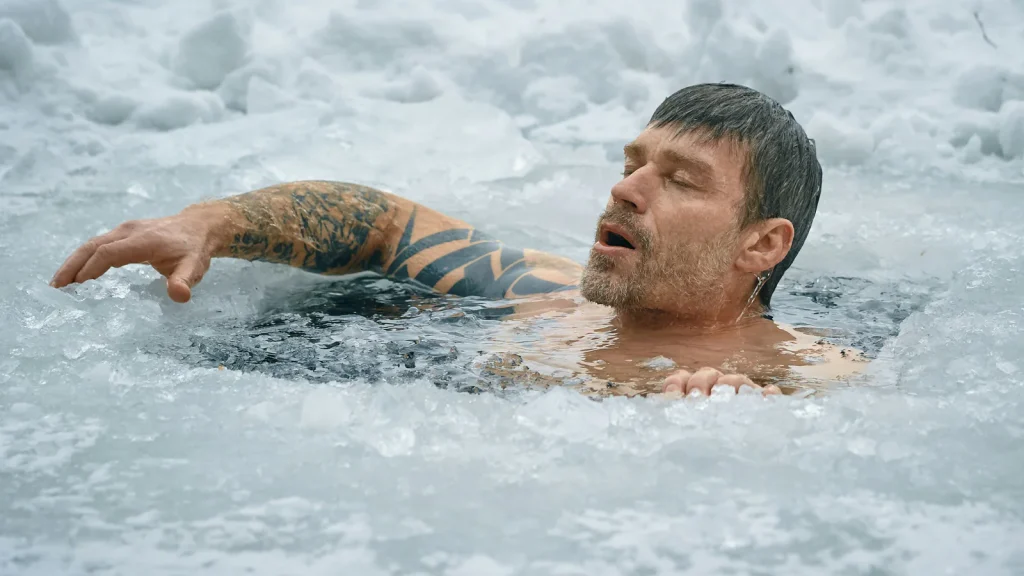
– Cold water immersion to waist level in 10°C water for 10 minutes
– Ten minutes of low-intensity cycling as active recovery
Both interventions began within five minutes of completing exercise.
Oxidative Stress and Redox-Related Gene Expression
In the acute study, researchers collected blood and skeletal muscle samples before and after exercise.
They assessed circulating oxidative stress markers, antioxidant activity, and the expression of genes involved in redox regulation.
Some blood markers differed between recovery interventions.
For example, F₂-isoprostanes were lower following exercise in the cold water immersion condition, while plasma glutathione peroxidase activity was higher two hours after exercise.
However, changes in muscle expression of redox-related genes, including NRF2, HMOX1, and TXN, did not differ significantly between cold water immersion and active recovery.
These findings suggest that differences in circulating oxidative stress markers do not necessarily correspond to equivalent differences in skeletal muscle gene expression.
Mitochondrial Adaptations After Three Months
In the longer-term intervention, researchers assessed citrate synthase activity and the activity of mitochondrial electron transport chain complexes I and IV.
They also examined selected proteins involved in energy metabolism regulation, including phosphorylated AMPK.
Training-related changes were observed in several mitochondrial markers.
However, the magnitude of these adaptations did not differ significantly between participants using cold water immersion and those performing active recovery.
Therefore, under the conditions investigated, repeated post-exercise cooling did not measurably attenuate mitochondrial enzyme adaptations compared with active recovery.
Changes in Muscle Oxygen Utilization
The researchers also used near-infrared spectroscopy to investigate muscle oxygenation and oxidative capacity.
Following the training intervention, participants in the cold water immersion group demonstrated slower muscle oxygen desaturation during a brief isometric contraction and greater oxygen consumption during repeated muscle contractions.
During a test involving 50 isokinetic contractions, muscle oxygen consumption increased significantly in the cold water immersion group but not in the active recovery group.
These findings may reflect differences in muscle oxygen delivery, utilization, or oxidative capacity.
However, the measurements do not independently establish the precise mechanisms responsible for these changes.
Implications for Exercise Physiology
The study suggests that cold water immersion after resistance exercise does not necessarily impair all molecular responses and mitochondrial adaptations associated with training.
It also highlights the importance of distinguishing between different physiological outcomes, since oxidative stress markers, gene expression, mitochondrial enzyme activity, and muscle oxygen kinetics may respond differently.
Several limitations should be considered.
Both studies involved relatively small samples consisting exclusively of healthy young men. Cold water immersion was compared with active recovery rather than complete rest.
Furthermore, the findings concerning mitochondrial adaptations should not be generalized to every aspect of resistance training.
In particular, the study does not demonstrate that cold water immersion is superior or equivalent to other recovery methods for maximizing muscular strength or hypertrophy.
Overall, the research indicates that the effects of post-exercise cooling on training adaptations are more complex than a simple beneficial-or-harmful distinction.
The choice of recovery strategy should therefore consider the exercise modality, physiological outcome of interest, and individual training objectives.
News source
- Journal or institution
- Experimental Physiology
- Source publication date
- 2026-07-22