Effects of High-Intensity Interval Training on Body Composition and Cardiometabolic Health in Physically Inactive Individuals: A Systematic Review and Meta-Analysis of Randomized Controlled Trials
Article information
- Authors
- Cunyu Lan, Beibei Lei, Juerui Li, Wenjie Huang, Kun Yang, Bo Gou
- Journal
- Metabolites
- Publisher
- MDPI
- Original publication date
- Original source
- View article at the original source (opens in a new tab)
Abstract
Background and Objective:
Physical inactivity is an important risk factor for cardiometabolic disorders, excess body weight, and reduced cardiorespiratory fitness. High-intensity interval training (HIIT) has been proposed as a time-efficient exercise strategy for improving health outcomes. This systematic review and meta-analysis aimed to evaluate the effects of HIIT on body composition and cardiometabolic health in physically inactive individuals, compared with no exercise and moderate-intensity continuous training (MICT).
Methods:
The study included 24 randomized controlled trials involving 877 participants. Outcomes included body weight, body mass index (BMI), body fat percentage, blood pressure, blood lipids, blood glucose, and maximal oxygen uptake (VO₂max). The quality and certainty of evidence were also assessed.
Results:
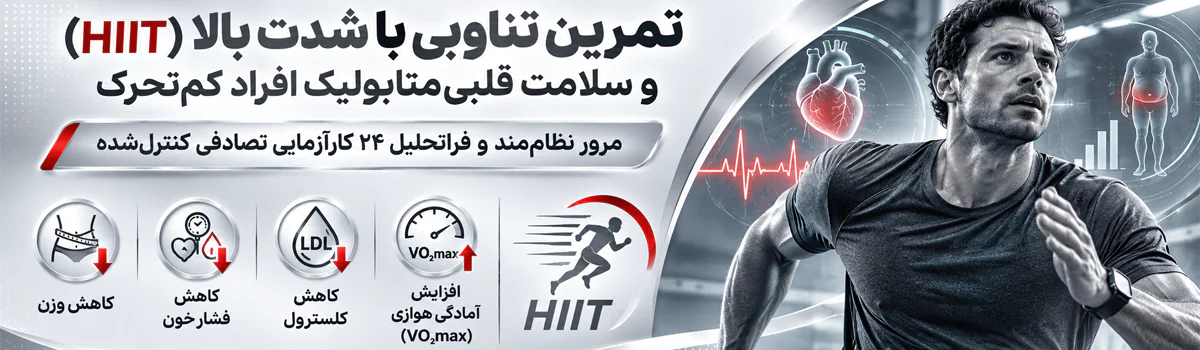
Compared with no-exercise controls, HIIT was associated with reductions in body weight (−1.60 kg), systolic blood pressure (−2.85 mmHg), diastolic blood pressure (−6.57 mmHg), low-density lipoprotein cholesterol (−0.29 mmol/L), and total cholesterol (−0.42 mmol/L).
VO₂max increased by an average of 7.72 mL/kg/min compared with no exercise.
Compared with MICT, HIIT produced no statistically significant differences in most outcomes, although VO₂max improved by an additional 3.72 mL/kg/min.
Changes in BMI, body fat percentage, blood glucose, triglycerides, and high-density lipoprotein cholesterol were not statistically significant compared with no-exercise controls.
Conclusion:
HIIT may improve selected measures of body composition, cardiometabolic health, and cardiorespiratory fitness in physically inactive individuals. However, the certainty of evidence was low or very low for most outcomes, and some findings were sensitive to individual studies. Further high-quality research is needed to clarify long-term effectiveness and optimal training protocols.