
Real-Time Monitoring of Skeletal Muscle Metabolism During Exercise Using Advanced Magnetic Resonance Spectroscopy
Researchers at the University of Nottingham have demonstrated a non-invasive approach to monitoring skeletal muscle metabolism in real time during exercise. Published in Nature Communications, the study combines advanced magnetic resonance spectroscopy techniques to reveal differences in pyruvate utilization and lactate production between endurance-trained and sedentary men. The findings offer a promising research platform for investigating exercise-induced metabolic adaptations and muscle physiology.
A New Approach to Monitoring Muscle Metabolism During Exercise
Understanding how skeletal muscles produce and utilize energy is fundamental to exercise physiology. During physical activity, muscular demand for adenosine triphosphate (ATP) increases rapidly, requiring coordinated adjustments across multiple metabolic pathways.
However, many conventional methods of investigating skeletal muscle metabolism rely on measurements obtained at rest or before and after exercise, limiting their ability to capture rapid metabolic changes during physical activity.
A study published on October 30, 2026, in **Nature Communications** introduces an advanced, non-invasive approach for examining real-time metabolic responses in exercising human skeletal muscle.
Combining Two Advanced Magnetic Resonance Techniques
Researchers combined hyperpolarized carbon-13 magnetic resonance spectroscopy (¹³C-MRS) with phosphorus-31 magnetic resonance spectroscopy (³¹P-MRS).
These complementary techniques provide information about pyruvate metabolism, phosphocreatine utilization, and changes in intracellular acidity.
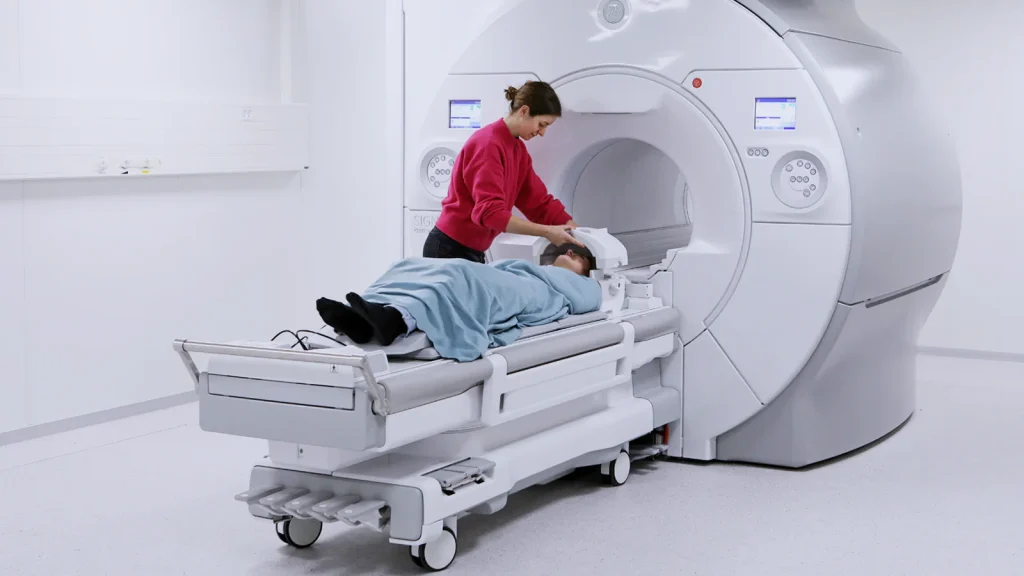
The investigation included sedentary and endurance-trained men who performed plantar-flexion exercise inside a magnetic resonance scanner.
During exercise, researchers monitored metabolic responses in the medial gastrocnemius muscle, allowing them to investigate changes associated with exercise intensity and training status.
Exercise Intensity Influences Pyruvate Metabolism
Pyruvate is a central intermediate in carbohydrate metabolism. It can undergo conversion to lactate or enter mitochondrial pathways involved in oxidative energy production.
The researchers observed that increasing exercise intensity was associated with greater pyruvate-to-lactate conversion relative to mitochondrial pyruvate utilization.
These findings demonstrate how increasing energy demand during exercise influences the relative contribution of metabolic pathways involved in carbohydrate utilization.
Differences Between Endurance-Trained and Sedentary Individuals
An important finding was the difference in metabolic responses between endurance-trained and sedentary participants.
Endurance-trained men demonstrated greater bicarbonate labeling, consistent with increased mitochondrial pyruvate utilization, alongside reduced lactate production.
These metabolic characteristics were accompanied by training- and intensity-dependent differences in phosphocreatine degradation and intracellular pH decline.
Together, these observations are consistent with adaptations in skeletal muscle energy metabolism associated with endurance training.
Implications for Exercise Physiology Research
The principal advantage of the combined spectroscopy approach is its ability to investigate muscle metabolic responses during exercise without invasive muscle tissue sampling.
This methodology may provide a valuable platform for studying exercise adaptations, individual metabolic differences, and physiological changes associated with aging and disease.
Nevertheless, the study was conducted in healthy men performing a specific exercise involving a particular muscle group. Its findings therefore cannot automatically be generalized to other populations, exercise modalities, or clinical conditions.
Furthermore, magnetic resonance labeling signals do not necessarily represent direct absolute measurements of every metabolic flux.
Additional validation is required before this technology can be widely applied to athlete assessment, clinical diagnosis, or individualized exercise prescription.
Overall, the research represents an important methodological advance in the dynamic assessment of skeletal muscle metabolism and may contribute to future developments in exercise physiology and human metabolic research.
News source
- Journal or institution
- Nature Communications
- Source publication date
- 2026-10-30